Casino de Monte-Carlo
Monte Carlo, Monaco
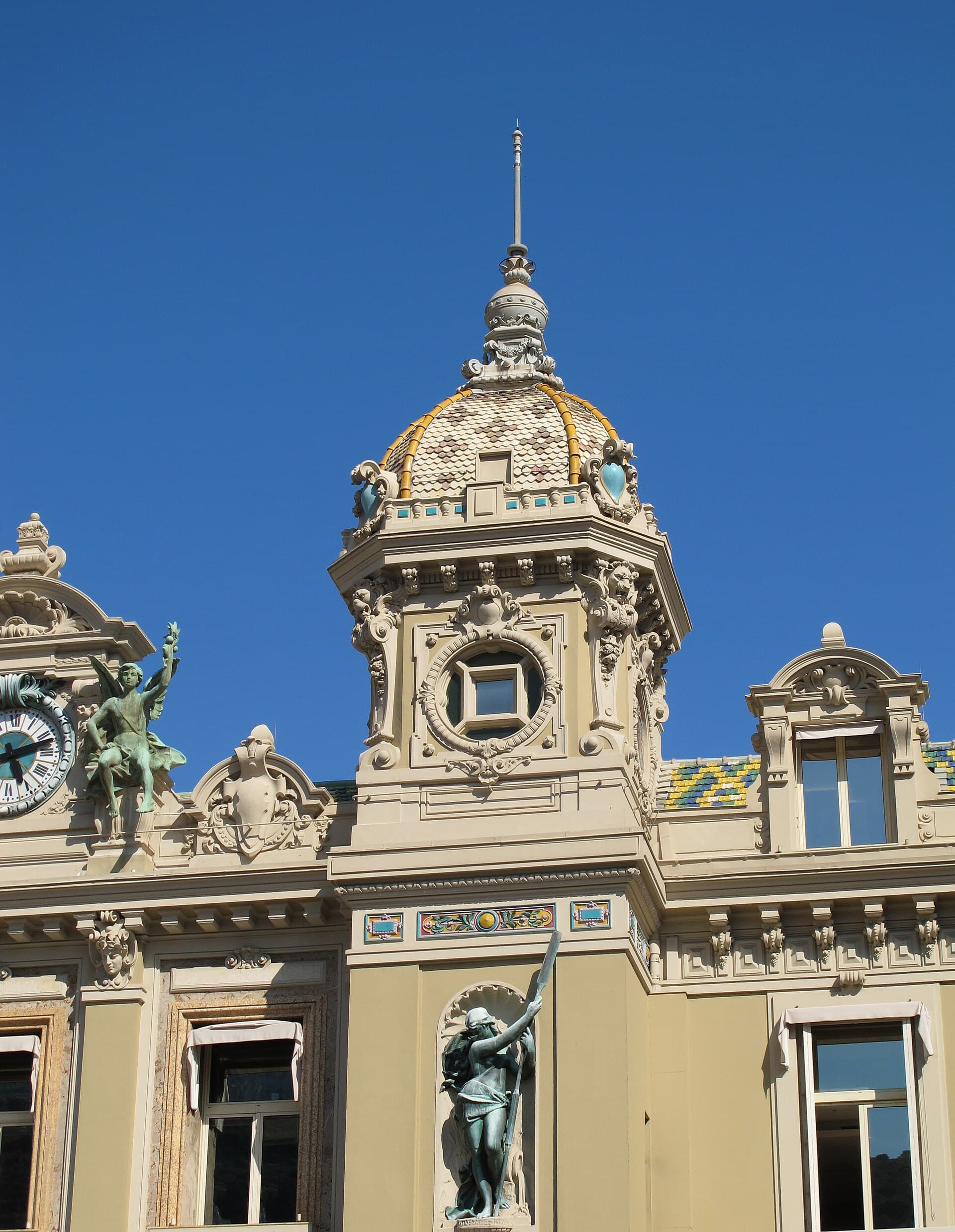
The atrium and gaming rooms Charles Garnier built for Princess Caroline's vision of a resort of last resort — still the reference point for what a European casino house is supposed to look like.
Few buildings anywhere carry as much cinematic and architectural weight as the Casino de Monte-Carlo. Commissioned by Princess Caroline and financier François Blanc to save the principality from bankruptcy, it opened its first rooms in 1863 and reached its full, opera-house grandeur in 1878-1879 under Charles Garnier — the same architect responsible for the Palais Garnier in Paris. The result is less a gambling hall than a public monument: an ornate stone façade facing the sea, twin towers, and an interior sequence of atriums, foyers, and gaming salons finished in marble, gilt bronze, and painted ceilings.
Walking through the Salle Renaissance and the Salle Europe, the atmosphere owes more to a state opera house than to any modern casino resort — caryatids and onyx columns frame the tables, and the famous glass-and-iron atrium (the Salle Garnier annex, home to the Opéra de Monte-Carlo) sits directly alongside the gaming rooms, so a night at the casino can begin or end at a performance next door. The Salons Privés, added and renovated over the twentieth century, keep the highest-stakes European and Punto Banco tables away from the tourist circulation, in rooms hung with Belle Époque detailing that has barely been altered in a century.
The public rooms welcome a mixed crowd of visitors who have come principally to see the building, alongside a determined core of European Roulette and Blackjack players; slot machines occupy a separate, brighter hall to one side. Because Monaco itself has almost no income tax and the casino was historically built to be a magnet for wealthy visitors rather than locals — Monégasque citizens are still barred from the gaming floor by law — the room retains a slightly theatrical, watched-and-watching quality that is part of the point of visiting.
A visit is best treated as two experiences: a daytime architectural tour of the atrium and public rooms (tickets are sold for exactly this, outside gaming hours), and, separately, an evening visit to actually play, for which formal dress and an entry fee at the door are the norm. Either way, this is the plate against which every other European casino house in this atlas is implicitly measured.
Highlights
- Atrium and Salle Garnier designed by Charles Garnier, architect of the Palais Garnier opera house
- Daytime architectural visits are ticketed separately from evening gaming access
- Salons Privés host the highest-stakes European Roulette and Punto Banco tables
- Monégasque nationals are legally barred from the gaming rooms
- Sits directly beside the Opéra de Monte-Carlo, sharing the same building complex