Spielbank Wiesbaden
Wiesbaden, Germany
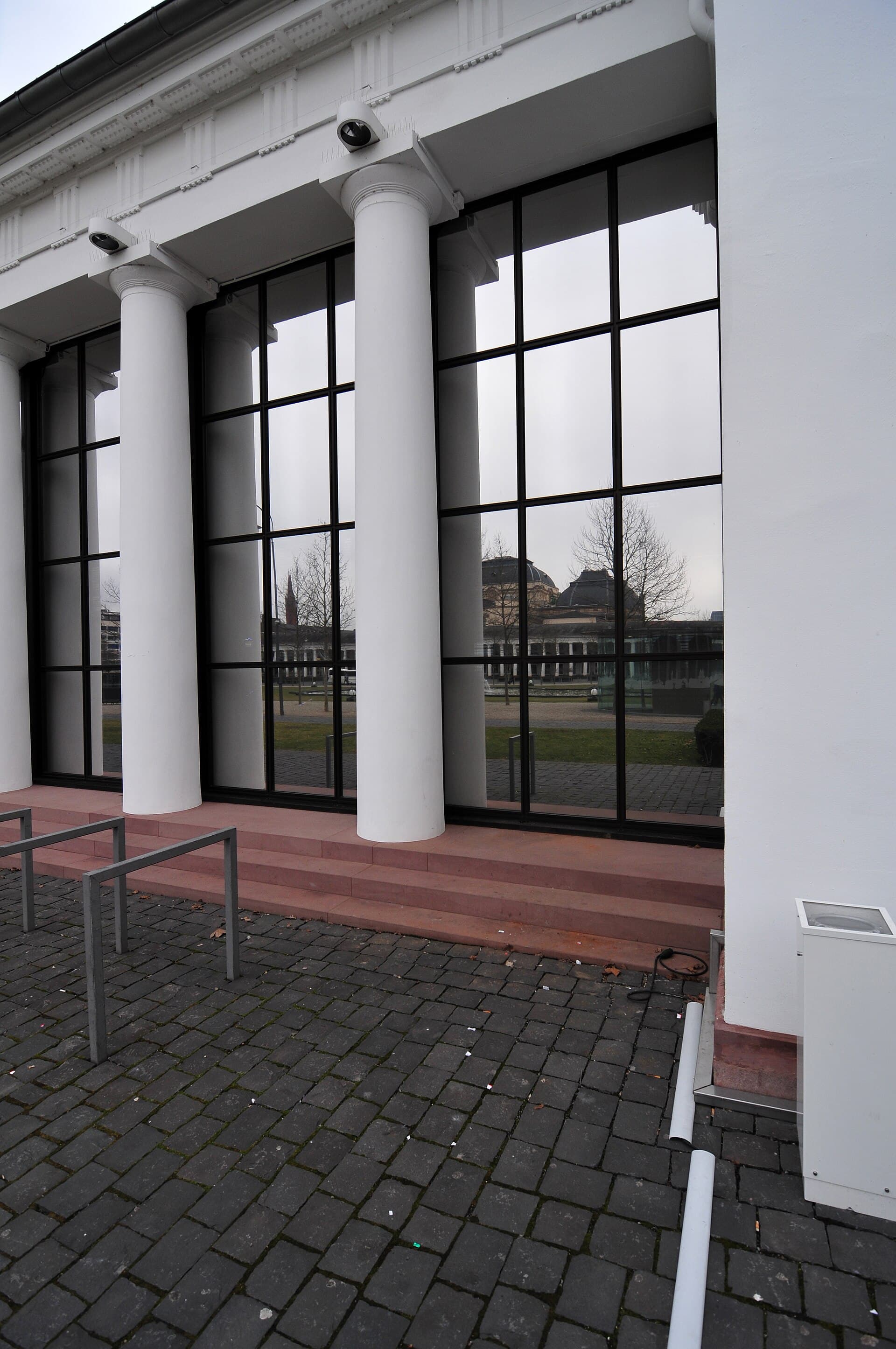
Fyodor Dostoevsky lost heavily at these tables in 1865, an episode he folded almost directly into The Gambler; the neoclassical Kurhaus rooms still carry that literary shadow.
Wiesbaden's casino sits at the heart of the Kurhaus, a grand neoclassical spa building completed in 1907 whose central portico and columned facade dominate the town's Kurpark. The gaming operation itself is older still, tracing back to 1771, and Wiesbaden was, alongside Baden-Baden and Spa, one of the great continental thermal towns where European high society spent long summer seasons moving between the mineral baths and the gaming tables.
The house's best-known association is literary rather than architectural: Fyodor Dostoevsky visited Wiesbaden in 1865 and lost heavily at Roulette, an experience scholars connect directly to The Gambler, which he wrote the following year partly to pay off the debts the trip had created. The casino leans into this history with quiet confidence rather than heavy theming — a small amount of contextual material acknowledges the connection, but the rooms remain working gaming salons rather than a literary museum.
Inside, the Kurhaus rooms keep a formal French-games section — Roulette and Punto Banco under high, ornately corniced ceilings — separate from a large American-games and slot-machine hall aimed at a broader evening crowd. The building's central Kurhaus hall, used for concerts and civic events when not in casino use, gives the whole complex a slightly more municipal, civic-institution feel than some of the more purely commercial houses elsewhere in this atlas.
Wiesbaden today functions as a quiet, well-preserved spa town rather than a nightlife destination, and the casino's clientele reflects that: a mix of regulars, day-trippers from Frankfurt, and visitors drawn specifically by the Dostoevsky connection. The surrounding Kurpark, with its own lake and colonnade, makes an easy pre- or post-visit walk.
Highlights
- Housed in the 1907 neoclassical Kurhaus, still used for concerts and civic events
- Dostoevsky's 1865 losses here are widely linked to the writing of The Gambler
- Gaming license traces back to 1771
- Separate French-games salons and American-games/slots hall
- Easy day trip from Frankfurt, about 40 minutes by train